



Neurological Rehabilitation
Neurological Rehabilitation can take many forms however normally occurs when someone has experienced an acquired brain injury, a Neurodegenerative condition or a neurodevelopmental condition. Exercise is critical for helping improve physical and emotional health and may also help to improve gait, tremor, flexibility, grip strength, balance, motor coordination and many more. It is important that Exercise is altered to the severity and complexity of the condition. As exercise physiologists we aim to treat the symptoms and the cause of the condition helping to improve quality of life, strength, flexibility, and mobility.
Most popular Neurological Conditions we treat:
- Stroke
- Traumatic Brain Injuries
- Tumor rehabilitation
- Parkinson’s Disease
- Functional Neurological Disorders
- Epilepsy
- Multiple Sclerosis
- Alzheimer’s Disease
- Cerebral Palsy
- Muscular Dystrophy
Services offered for Neurorehabilitation:
- Hydrotherapy
- Specialty gym treatment
- Home Visits
- Supervised use of community facilities (e.g. community gyms, sports courts ect)
How Can Exercise Physiology Help
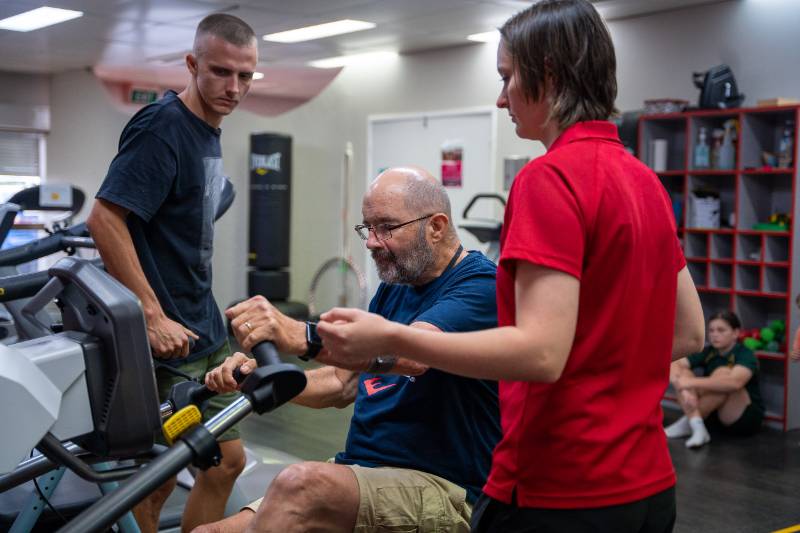
It is important to note that while the treatment modalities are similar for most neurological condition, intensity, duration and types of activities will vary depending on the functionality, fitness and ability of the client that it presenting to the clinic. Neurological conditions are variable in nature and can look very different from person to person so there is no one approach that can be used for everyone. Our Exercise Physiologist aim to tailor their program specifically to the client and their current situation, using the most to date research, and a plethora of clinical experiences.
For more information on how Exercise Physiology can benefit specific neurological conditions, please see the sections below.
Stroke
Reasearch shows that exercise and other allied therapy services are critical within the first 6-8 months following a stroke, to ensure the optimal amount of function is regained. However, Neuroplasticity training has been shown to elicit benefits throughout the entire lifespan of a person – showing that it is never too late to start physical therapy to help with stroke recovery.
Exercise therapy for stroke aims to incorporate aspects of neuroplasticity training to help regain use of dead pathways within the brain, Strength exercise to increase muscle activation, power and strength, stretching and flexibility activities to help with spasticity and dystonia and cardiovascular exercise to help prevent reoccurrence of stroke within the future.
Exercise Physiology Treatment may help to improve:
- Speech through increased core control
- Balance, posture and stability
- Gross and fine motor function
- Proprioception
- Mobility and general physical functioning
Traumatic Brain Injuries
Known as an injury that occurs due to a forceful blow, bump, jolt to the head or body, or an object that pierces the skull and enters the brain. TBI’s can require temporary therapy to help regain normal functioning, however normal requires prolonged long-term treatment to ensure function is prolonged and maintained.
TBI injuries vary and are known to affect many aspects of a person’s functioning such as their ability to:
- Concentrate, make decisions and remember short and or long term memories.
- Regulate their emotions leading to increased frustration and irritability.
- Speak Clearly – often exhibit softened or slurred speech.
- Mobilize effectively due to weakness within the legs, face arms and decreased balance.
Exercise Physiology services may help to improve some of the symptoms above, leading to increases in mobility and functionality within day to day living. In particular, exercise treatment aims to work with a clients limitations to maximize their level of ability. We will focus on strengthening the weaknesses, increasing endurance, improving transfer and mobility safety and efficiency, and increasing overall quality of life.
Parkinson’s Disease
Parkinson’s Disease is a progressive neurological disorder, which effects many areas of the nervous system. Traditionally Parkinson’s is known as a lack of dopamine neurones in the brain causing motor impairments such as;
- Tremor
- Rigidity (stiffness)
- Bradykinesia (slow movements)
- Akinesia (freezing or absence of movement)
- Balance concerns
More up to date research however has found that there are more changes both motor and non motor that can effect a person with parkinson’s such as;
- Anxiety
- Depression
- Impaired cognition
- Sleep disorders and pain.
- Autonomic dysfunction.
So how can exercise help with Parkinson’s?
It is important to note that while exercise has considerable positive benefits, most of the time it should be in conjunction with medication and other therapies and treatments for the client to get the best results.
- Reduce the effect of motor symptoms.
- improve mobility.
- Improve muscle strength and balance.
- Reduce falls.
- Slow disease progression.
- Improve mood.
- Reduce fatigue and pain.
- Improve autonomic dysfunction.
Functional Neurological Disorders
Functional Neurological Disorder (FND) can be a distressing condition which effect the functional workings of the body. Typically referred to as a software concern within the brain, FND can often mimic the symptoms of other neurological disorders, however, fails to meet the diagnostic criteria of these conditions. FND is typically triggered by some sort of traumatic event, whether this be pain and injury or psychological stress and trauma.
Symptoms of FND may include:
- Limb weakness
- tremor (shaking)
- dystonia (abnormal posturing)
- Gait Disorders
- Dysphagia (difficulty swallowing)
- Non-Epileptic seizures
- Altered loss of consciousness
- Chronic pain
- Fatigue
- Difficulty with cognitive function
- Altered sensory symptoms.
FND requires the assistance of a multi-disciplinary team to treat. It is quite common for a person with this condition to be seeking help from other professionals such as; psychologists, occupational therapists, psychiatrists, speech pathologists, social workers and nurses. It is essential that any client with the above symptoms engage the assistance of an exercise physiologist to help regain function and help retrain the brain out of these altered patterns of functioning (recoding the software to remove the glitch).
Epilepsy
It is very common for people and families of people with epilepsy to be concerned about the impact exercise will have on their seizures. This concern typically results in activity restriction and an increase within sedentary behaviors. Research however has found that the overall harmful impact of exercise for a person with epilepsy is minimal and in fact can help to reduce symptom onset, seizure intensity and reduced brain damage following a major seizure.
So far within all the research that has been performed there is no direct link found to say that exercise causes or exacerbated seizure occurrence or duration, however it is important to remember that the environment surrounding exercise could involve triggering stimuli for a seizure to occure.
Multiple Sclerosis
Exercise forms an integral part of treatment for people experiencing multiple sclerosis. Inactivity encourages symptoms of fatigue, poor strength and poor fitness. Poor fitness levels are also associated with higher fatigue levels and a higher risk of developing chronic health conditions. Exercise has been found to:
- reduce fatigue levels
- Improve endurance, balance and coordination.
- Improved muscle strength, posture and flexibility.
- Improve mood, confidence, sense of wellbeing and ability to perform everyday tasks
- Reduce risk of falls and improve mobility.
- Increase energy, alertness and concentration
- Improve recovery following relapse in symptoms.
Alzheimer’s Disease
Alzheimer’s disease is a progressive neurodegenerative disorder characterized by memory loss and multiple cognitive disorders. Exercise has a very powerful protective and therapeutic effect when it comes to the prevention and treatment of Alzheimer’s and dementia. It has been found that regular performance of exercise performance throughout the lifespan can help to diminish the occurrence of dementia and Alzheimer’s.
In addition further studies have found exercise has less side effects than pharmaceutical
Cerebral Palsy
Muscular Dystrophy
We accept all participating Health Funds


Rockhampton
5/287 Richardson Road, Kawana
Yeppoon
2 Braithwaite Street
Emu Park
1/24 Hill Street